
विशेष मालिका | Special Series — कृषी पर्व | Krishi Parva | krishiparva.in
PART 1 — ENGLISH
Kharif 2026: War on Three Fronts
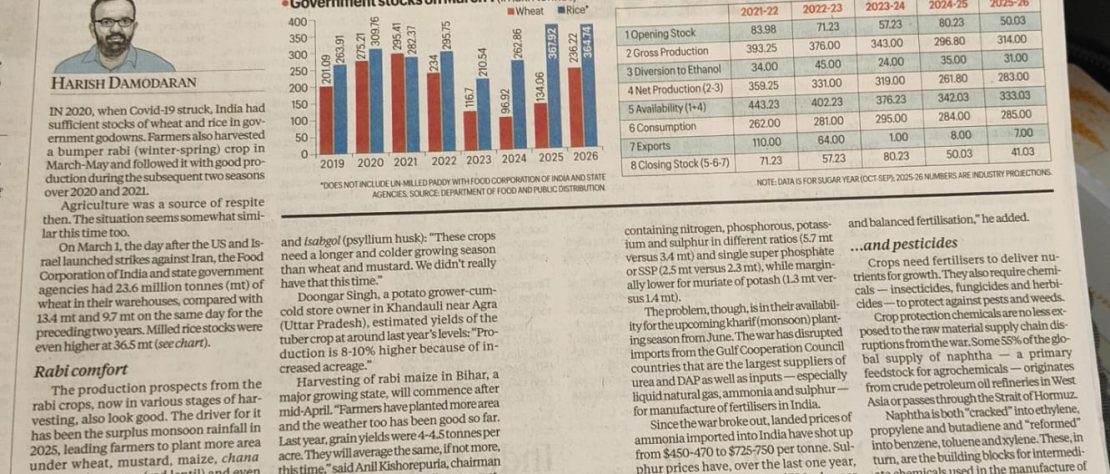
On the morning of March 1, 2026 — the day after the United States and Israel launched strikes against Iran — India’s food security apparatus looked reassuringly stable. The Food Corporation of India and state government agencies reported 23.6 million tonnes of wheat in government godowns, and milled rice stocks were even higher at 36.5 million tonnes. These numbers, as reported in The Indian Express’s landmark Explained piece by senior agricultural journalist Harish Damodaran on April 1, 2026, were higher than the same day for the preceding two years.
That is the good news. The rabi comfort is real.
But India’s kharif 2026 — the season that feeds the nation through the second half of the year — is staring down three simultaneous threats. No single one of them would be easy to manage. Together, they constitute the most complex agricultural policy challenge India has faced since the Covid-disrupted seasons of 2020-21.
Threat One — El Niño: The return of the Pacific Ocean warming pattern that historically suppresses India’s south-west monsoon. After two consecutive years of adequate rainfall in 2024 and 2025 — the very rainfall that built up those comfortable government stocks The Indian Express reported — the forecast is now turning ominous.
Threat Two — The Iran War and Fertiliser Supply Chain Collapse: The Strait of Hormuz, the narrow waterway between Iran and Oman, is the artery through which naphtha, ammonia, sulphur and phosphoric acid — the essential building blocks of India’s fertiliser and agrochemical industry — must pass. It is now a war zone. The Indian Express documents the price consequences in stark numbers: ammonia has gone from $450–470 to $725–750 per tonne. Sulphur has exploded from below $200 to $700-plus per tonne. Imported DAP has risen from $640–650 to about $825 per tonne.
Threat Three — Trump Tariffs: A 26% tariff on Indian goods entering the United States, announced in early 2026, strikes at the heart of India’s high-value agricultural export economy — shrimp, basmati, cotton, spices, processed foods.
Three threats. One kharif season. This series analyses each in depth and asks: what must farmers, governments, and markets do — now?
jai bhim | jai samvidhan | jai kisan
भाग २ — मराठी
खत-साखळी तुटली: इराण युद्धाची आग भारतीय शेतापर्यंत
१ एप्रिल २०२६ रोजी द इंडियन एक्स्प्रेसच्या ‘Explained’ पानावर ज्येष्ठ कृषी पत्रकार हरीश दामोदरन यांनी एक महत्त्वाचा प्रश्न उपस्थित केला: अन्नधान्याचा साठा भरपूर आहे, रब्बी पीकही चांगले आहे — तर मग काळजी कशाची? उत्तर एकाच शब्दात आहे: खते.
रब्बी आराम — पण हे चित्र फसवे आहे का?
१ मार्च २०२६ रोजी सरकारी गोदामांमध्ये गव्हाचा २ कोटी ३६ लाख टन साठा होता. तांदळाचा साठा त्याहूनही जास्त, ३ कोटी ६५ लाख टन होता. हे आकडे मागील दोन वर्षांपेक्षा जास्त आहेत. इंडियन एक्स्प्रेसने दिलेल्या सरकारी साठ्याच्या आलेखात २०१९ पासून २०२६ पर्यंत गहू आणि तांदळाचा साठा वाढतच असल्याचे दिसते. त्यामुळे आत्तापुरते खाद्यान्न महागाईचे संकट नाही.
परंतु खरीप पेरणी जून-जुलैमध्ये होते. आणि त्यासाठी लागणाऱ्या खताची उपलब्धता आत्ताच प्रश्नचिन्हाखाली आहे.
होर्मुझ: जग ज्या सामुद्रधुनीला विसरले होते
होर्मुझची सामुद्रधुनी ही इराण आणि ओमान दरम्यानचा एक अरुंद जलमार्ग आहे. जगाच्या तेल व्यापारातील सुमारे २० टक्के वाटा या मार्गातून जातो. परंतु इंडियन एक्स्प्रेसने नमूद केल्यानुसार, हाच मार्ग भारताला नत्र, स्फुरद, पालाश यांचे खत बनवण्यासाठी लागणाऱ्या कच्च्या मालाचीही जीवनरेखा आहे. युद्ध सुरू झाल्यापासून ही जीवनरेखा आवळली गेली आहे.
किमतींचा धक्का — इंडियन एक्स्प्रेसचे आकडे
इंडियन एक्स्प्रेसने दिलेल्या माहितीनुसार सध्या खालीलप्रमाणे परिस्थिती आहे:
अमोनियाची किंमत प्रति टन ४५०-४७० डॉलरवरून ७२५-७५० डॉलरवर गेली आहे — म्हणजे ६० टक्के वाढ.
सल्फरची किंमत २०० डॉलरपेक्षा कमी होती, ती आता ७०० डॉलरपेक्षा जास्त झाली आहे — म्हणजे तब्बल अडीचशे टक्क्यांहून अधिक वाढ.
आयात केलेल्या डीएपीची किंमत ६४०-६५० डॉलरवरून सुमारे ८२५ डॉलर प्रति टनापर्यंत पोहोचली आहे.
इसबगोल, जिरे आणि सामान्य शेतकरी
इंडियन एक्स्प्रेसच्या वृत्तात गुजरातच्या खांडौलीतील बटाटा उत्पादक-शीतगृह मालक दुंगर सिंह यांचे उदाहरण आहे. इसबगोलसारखी पिके घेणाऱ्या शेतकऱ्यांना या वर्षी पेरणीसाठी लांब हंगाम आणि थंड काळ लागतो. या पिकांचे क्षेत्र गव्हा-मोहरीपेक्षा कमी असल्याने त्यांना गेल्या वर्षीसारखी मागणी मिळालीच नाही असे ते सांगतात. बिहारमधील मक्का उत्पादक मध्य एप्रिलनंतर काढणी सुरू करतील. Regal Resources Ltd चे Anil Kishorepuria यांच्या मते, मागील वर्षी उत्पादन एकरी ४.५ टन होते; यावर्षी तेवढेच किंवा त्याहून अधिक अपेक्षित आहे. परंतु खताचा खर्च वाढल्यामुळे शेवटी शेतकऱ्याच्या हातात किती उरते हा प्रश्न आहे.
साठ्याची वास्तविकता
इंडियन एक्स्प्रेसने सांगितलेल्या आकड्यांनुसार, भारतात दरवर्षी युरियाचा ४ कोटी टन वापर होतो. त्याशिवाय संयुक्त खतांचा १४ लाख टन आणि सिंगल सुपर फॉस्फेट (SSP) चा ५ लाख टन वापर होतो. युरियाचा सध्याचा साठा ६१ लाख टन आहे. डीएपीचा साठा केवळ २४ लाख टन आहे. SSP ची मागणी प्रति खरीप हंगाम २.५ लाख टन आहे, पण सध्या उपलब्धता केवळ १.४ लाख टन आहे.
म्हणजेच खरीपच्या पहिल्या सहामाहीची गरज भागवण्यासाठी आयात सुरळीत झाली नाही तर खताचा तुटवडा अटळ आहे.
jai bhim | jai samvidhan | jai kisan
PART 3 — ENGLISH
The Agrochemical Supply Chain: Naphtha, Pesticides and the Hormuz Chokepoint
The Indian Express’s April 1 analysis by Harish Damodaran does something unusual for a newspaper article — it traces the full supply chain from a crude petroleum refinery in West Asia to a pesticide bottle on a farmer’s shelf in Maharashtra. That chain, the piece explains with quiet alarm, runs directly through the Strait of Hormuz.
From Crude Oil to Crop Protection
About 55% of the global supply of naphtha — the primary feedstock for agrochemicals — originates in crude petroleum refineries of West Asia or passes through the Strait of Hormuz. From naphtha come propylene and butadiene. These are then “cracked” and “reformed” into benzene, toluene and xylene. These three chemicals are the building blocks for the active ingredients in India’s pesticides and herbicides, as well as their emulsifiers and solvents.
This is not abstract chemistry. This is the molecular foundation of every bottle of herbicide, every bag of fungicide, and every packet of insecticide that a farmer in Vidarbha or Marathwada buys before kharif sowing.
The Glyphosate Problem: A Specific Case Study
The Indian Express quotes Sohit Sapra, chief business officer at the New Yavatmal-based Crystal Crop Protection Ltd., to explain what is happening to glyphosate — India’s most widely used herbicide. Glyphosate is formulated using isopropylamine, which is derived from isopropanol, which in turn comes from propylene. When naphtha and propylene supplies from the Middle East are disrupted, Chinese manufacturers — who supply isopropylamine — raise their prices. That cost then flows through to the Indian formulator, and then to the farmer.
“Packaging material costs apart,” Sapra told The Indian Express, “these costs are all linked to petrochemicals and the war.” He noted that packaging costs alone — HDPE and PET bottles, flexible pouches, master carton boxes, even labels — have escalated 30–40%. “How these costs will play out in farmers’ fields, and eventually food prices, remains to be seen,” he added.
Base Chemicals: The Quiet Escalation
Beyond the headline fertiliser numbers, The Indian Express flags a less-noticed category: base chemicals including sulphur and methanol. These have also seen cost escalation in packaging materials and chemical intermediates. For a farmer applying pesticides across 2–3 acres of cotton or soybean, this could translate to an additional out-of-pocket expense of ₹1,500–2,500 per acre — on top of the fertiliser price shock.
Fertiliser Demand vs. What’s Actually Available
The Indian Express is precise on the demand-supply gap in fertilisers entering kharif 2026. India’s requirement for the first half of the kharif season — the critical April-to-June window — includes urea, DAP, SSP and complex NPK fertilisers. The piece notes that complex fertilisers require nitrogen, phosphorus and sulphur in different ratios: 5.7 mt vs 3.4 mt, and single super phosphate, or SSP, of 2.5 mt versus just 1.4 mt currently available. Against the requirement for SSP of 2.5 mt versus only 1.4 mt available, the gap is stark.
The need for potassium muriate of potash at 1.3 mt versus current availability makes the shortfall even more visible across the nutrient chain.
The Policy Opportunity Hidden Inside the Crisis
The Indian Express identifies a structural opening inside this supply crisis: India’s excessive dependence on urea. The heavy urea subsidy has for decades pushed farmers towards nitrogen-heavy, imbalanced fertilisation — damaging soil health and suppressing productivity of other nutrients. The disruption to DAP and complex fertilisers creates pressure on the government to restructure the subsidy architecture and push farmers towards balanced NPK fertilisation. Soil Health Cards, if deployed aggressively this season, can guide farmers towards nutrient-efficient choices and reduce the effective demand for disrupted imports.
jai bhim | jai samvidhan | jai kisan
भाग ४ — मराठी
एल निनो आणि मान्सून २०२६: JAMSTEC डेटा काय सांगतो
इंडियन एक्स्प्रेसने इराण युद्ध आणि खत संकटाचे जे विश्लेषण केले, त्याच्या पार्श्वभूमीवर हवामानाचा धोका आणखी तीव्र वाटतो. कारण खत जरी उपलब्ध असले, तरी पाऊस नसेल तर पीक नाही. आणि २०२६ मध्ये पावसाचीच सर्वात जास्त काळजी आहे.
एल निनो म्हणजे काय आणि तो मान्सूनला कसा मारतो
प्रशांत महासागरातील पाण्याचे तापमान जेव्हा सरासरीपेक्षा जास्त होते, तेव्हा त्याला एल निनो म्हणतात. या असामान्य उष्णतेमुळे हिंद महासागरातील वाफेची वाहतूक कमी होते, ज्याचा थेट परिणाम भारतातील नैऋत्य मान्सूनच्या प्रवाहावर होतो. भारतात मान्सून कमकुवत होतो. पाऊस उशिरा येतो, कमी येतो, किंवा मध्येच खंड पडतो.
JAMSTEC SINTEX-F मॉडेल: एक विश्वासार्ह इशारा
जपानच्या JAMSTEC संस्थेने — ज्यांच्याशी कृषी पर्वाचे गेल्या सोळा वर्षांपासून नाते आहे आणि जे २०१०-११ पासून SINTEX-F हंगामी अंदाज डेटा पुरवत आहेत — मार्च-एप्रिल २०२६ च्या अंदाजात Niño 3.4 क्षेत्रातील समुद्र पृष्ठभागाचे तापमान तटस्थतेच्या वर जात असल्याचे नमूद केले आहे. जून-जुलैपर्यंत हे तापमान शून्यापेक्षा ०.७ ते १.२ अंश सेल्सिअस अधिक होण्याची शक्यता आहे. हे मध्यम ते तीव्र एल निनोचे संकेत आहेत.
इतिहास काय सांगतो
२०१४ च्या सौम्य एल निनोत देशाच्या सरासरी पावसाच्या केवळ ८८ टक्के पाऊस झाला. मराठवाडा आणि विदर्भात तीव्र दुष्काळ पडला.
२०१५ च्या तीव्र एल निनोत केवळ ८६ टक्के पाऊस झाला. सोयाबीन, कापूस, खरीप ज्वारीच्या उत्पादनात मोठी घट झाली.
२०२३ च्या मध्यम एल निनोत ऑगस्ट-सप्टेंबरमध्ये पावसात खंड पडला.
महाराष्ट्राची विशेष असुरक्षितता
इंडियन एक्स्प्रेसने उद्धृत केलेले Indian Agricultural Research Institute चे शास्त्रज्ञ Rajbir Yadav सांगतात की थंड आणि ओल्या हवामानामुळे गव्हाच्या grain-filling ला फायदा झाला. पण हे उलटे झाले — म्हणजे उष्ण आणि कोरडे हवामान — तर खरीप पिकाला मोठा फटका बसतो.
महाराष्ट्रात खरीप क्षेत्राच्या ७०-७५ टक्के भागात पावसावर अवलंबून शेती आहे. सोयाबीन, कापूस, तूर, खरीप ज्वारी — ही सगळी पिके पाण्याच्या ताणाला अत्यंत संवेदनशील आहेत. मराठवाडा आणि विदर्भात पर्जन्यमानात १५-२० टक्के घट झाली तरी उत्पादन ३०-४० टक्क्यांनी घसरू शकते.
पण इंडियन एक्स्प्रेस एक महत्त्वाचे वास्तव सांगते
इंडियन एक्स्प्रेसच्या वृत्तानुसार, रब्बी हंगामात कमाल तापमान घसरल्यामुळे गव्हाच्या grain-filling ला फायदा झाला. उत्तर प्रदेश आणि वायव्य राज्यांमध्ये गहू मध्य एप्रिलपर्यंत काढणीला येईल. हे सांगणे म्हणजे — रब्बी भरपूर असला तरी खरीप हे स्वतंत्र युद्ध आहे. रब्बीचा साठा खरीपची निश्चिंतता देत नाही.
आत्ता काय करायचे
बियाणे आत्ताच खरेदी करा — दुष्काळ-सहनशील वाण निवडा. बाजरी, मूग, उडीद, तिळ या पिकांचा विचार करा. शेततळे दुरुस्त करा, बंधारे स्वच्छ ठेवा. ड्रिप-स्प्रिंकलर अनुदान अर्ज एप्रिलमध्येच भरा. पीक विमा मुदत संपण्यापूर्वी भरा.
jai bhim | jai samvidhan | jai kisan
PART 5 — ENGLISH
The Trump Tariff: How America’s Trade War Reaches the Indian Farm
The Indian Express’s April 1 piece focuses its attention on the Iran war and fertiliser supply chain. But running parallel — and equally unexamined in mainstream agricultural discourse — is the third arm of the Triple Threat: the 26% reciprocal tariff that the Trump administration imposed on Indian goods in early 2026.
Unlike the fertiliser crisis, which hits the farmer’s cost side, the tariff hits the revenue side. It reduces what Indian farmers and exporters can earn for what they grow.
What India Exports to the US — and What’s Now at Risk
The United States is among India’s top five agricultural export markets. India’s total agricultural exports in 2024–25 stood at approximately $53 billion. In high-value segments — shrimp and seafood, basmati rice, spices, cotton yarn, processed fruits — the US is the largest or second-largest buyer.
Shrimp and seafood constitute the most exposed segment. India is the world’s largest shrimp exporter by volume. Nearly 40% of India’s shrimp exports — worth over $3 billion annually — go to the United States. The principal competitor, Ecuador, has been assigned a lower reciprocal tariff. If this differential persists through the 2026 aquaculture cycles, Indian shrimp farmers in Andhra Pradesh, Odisha, Gujarat and West Bengal could see export realisations fall by 15–20%.
Cotton is the other major vulnerability. Maharashtra’s Vidarbha — already scarred by farmer distress and debt — grows a substantial share of India’s cotton. The tariff makes Indian cotton less attractive to US textile mills. At the same time, as The Indian Express documents, rising pesticide costs from the Iran supply disruption are increasing the cost of cotton cultivation. Margin compression from both ends — rising input cost and falling export realisation — could deter cotton sowing in kharif 2026.
The Indian Express Context: A Double Bind for Farmers
The Indian Express’s April 1 analysis illuminates the bind: farmers are being squeezed on both inputs and outputs simultaneously. On the input side, the Iran war has sent fertiliser and pesticide raw material prices soaring — ammonia up 60%, sulphur up 250%, DAP up 27%. On the output side, Trump tariffs are reducing export realisations for key cash crops. Between these two pressures, the farmer’s net income is being crushed from both directions.
Interestingly, The Indian Express notes that India has ample food stocks and a bumper crop — so there is no food inflation risk from a supply shortage. But that is precisely the wrong metric. The question is not whether India has enough food — it does. The question is whether farmers can grow that food profitably in 2026. The answer, without urgent policy intervention, is increasingly uncertain.
The Rupee: A Partial Offset
The Indian rupee’s depreciation against the dollar through 2025–26 offers a partial offset. A weaker rupee makes Indian exports cheaper in dollar terms, partially absorbing the tariff impact for exporters. However, this benefit is uneven: farmers who import inputs — fertilisers, pesticide intermediates, seeds — pay more in rupee terms, negating part of the export price advantage.
What Needs to Happen
The government must fast-track bilateral trade negotiations with the United States to reduce or eliminate the tariff differential on key agricultural products. In the interim, targeted market development assistance for exporters in the shrimp, spice and cotton sectors can help redirect exports toward ASEAN, the Middle East, and Africa — markets that are growing rapidly and where India faces no punitive tariffs.
jai bhim | jai samvidhan | jai kisan
भाग ६ — मराठी
तिहेरी संकटातून वाट काढताना: शेतकऱ्यांसाठी खरीप २०२६ रणनीती
इंडियन एक्स्प्रेसने १ एप्रिल २०२६ रोजी दिलेले विश्लेषण एका महत्त्वाच्या वाक्याने संपते: “How these costs will play out in farmers’ fields, and eventually food prices, remains to be seen.” म्हणजे संकट निश्चित आहे, परिणाम अजून ठरायचे आहेत. आपण ते ठरवण्याच्या प्रक्रियेत आहोत. शेतकऱ्याने आत्ता निर्णय घेतले नाहीत, तर ते नंतर महागात पडतील.
इंडियन एक्स्प्रेसने सांगितलेली स्थिती — एकत्रित आढावा
इंडियन एक्स्प्रेसच्या आकडेवारीनुसार खरीप २०२६ ची आव्हाने खालीलप्रमाणे आहेत:
अमोनियाची किंमत ६० टक्क्यांनी वाढली आहे. सल्फर अडीचशे टक्क्यांपेक्षा जास्त महागले आहे. डीएपी २७ टक्क्यांनी महाग झाला आहे. SSP ची मागणी २.५ लाख टन असताना पुरवठा केवळ १.४ लाख टन आहे. कीटकनाशकांचे पॅकेजिंग आणि रासायनिक घटक ३०-४० टक्क्यांनी महागले आहेत. शेती निर्यातीवर अमेरिकेकडून २६ टक्के जकात आहे. एल निनोचा धोका जून-जुलैमध्ये तीव्र होण्याची शक्यता आहे.
हे सात घटक एकत्र आले तर खरीप हंगाम अत्यंत कठीण होऊ शकतो.
शेतकऱ्यांसाठी एप्रिल-मे मध्ये कराव्यात अशा गोष्टी
पहिली गोष्ट — माती परीक्षण आत्ताच करा. इंडियन एक्स्प्रेसने सुचवलेल्या मार्गाने विचार करा: युरियावर अवलंबित्व कमी करा, संतुलित NPK खते वापरा. माती परीक्षण केल्यास खताचा अंदाजे ३०-४० टक्के खर्च वाचू शकतो.
दुसरी गोष्ट — बियाणे आत्ताच खरेदी करा. एल निनोच्या शक्यतेमुळे दुष्काळ-सहनशील वाण निवडणे आवश्यक आहे. बाजरी, मूग, उडीद, तिळ या पिकांना प्राधान्य द्या.
तिसरी गोष्ट — खत साठा वेळेत करा. SSP चा तुटवडा असल्याने इंडियन एक्स्प्रेसने नोंदवलेल्या वास्तवाच्या आधारे — जूनपर्यंत थांबले तर खत मिळणे कठीण होईल.
चौथी गोष्ट — जैविक पर्याय वापरा. गांडूळखत, रायझोबियम, PSB यांचा वापर वाढवा. रासायनिक खताचा खर्च कमी होईल.
पाचवी गोष्ट — पीक विमा वेळेत भरा. PMFBY ची नोंदणी मुदत संपण्यापूर्वी करा. या वर्षी विम्याचे महत्त्व इतर कोणत्याही वर्षापेक्षा जास्त आहे.
सहावी गोष्ट — पाणी नियोजन करा. शेततळे दुरुस्त करा. ड्रिप-स्प्रिंकलर अनुदान अर्ज एप्रिलमध्येच भरा.
सरकारने काय करावे
इंडियन एक्स्प्रेसने तज्ज्ञांच्या हवाल्याने सांगितले आहे की SSP आणि संयुक्त खतांकडे शेतकऱ्यांना वळवण्याची ही संधी आहे. युरिया सबसिडीच्या अती वापरामुळे मातीचे नुकसान होत आहे. सध्याचे संकट सबसिडी पुनर्रचनेची संधी आहे.
त्याशिवाय: डीएपी-एसएसपी आयातीला तातडीने वेग द्यावा. अमेरिकेशी व्यापार करार वाटाघाटी वेगाने पूर्ण कराव्यात. निर्यात-अवलंबून शेतकऱ्यांसाठी विशेष पॅकेज द्यावे. IMD आणि JAMSTEC हवामान अंदाज थेट शेतकऱ्यांपर्यंत पोहोचवावेत. मान्सून पूर्वतयारी कार्यक्रम एप्रिलमध्येच सुरू करावेत.
या मालिकेचा निष्कर्ष
इंडियन एक्स्प्रेसने आपल्या विश्लेषणाच्या शीर्षकात म्हटले आहे: “Ample stocks and a bumper crop are likely to keep food inflation in check. But broken fertiliser and pesticide supply chain is a concern.” हे अर्धसत्य आहे. उरलेले अर्धे सत्य असे आहे: एल निनो आणि ट्रम्प टॅरिफ मिळवले तर केवळ पुरवठा साखळी नाही — संपूर्ण खरीप अर्थव्यवस्था धोक्यात आहे.
तिहेरी संकट म्हणजे तिहेरी संधी सुद्धा आहे — कमी पाणी लागणाऱ्या पिकांकडे जाण्याची, रासायनिक खतांवरील अवलंबित्व कमी करण्याची, आणि नव्या निर्यात बाजारपेठा शोधण्याची. भारतीय शेतकऱ्याने याआधीही अशा संकटांचा सामना केला आहे. माहिती, नियोजन आणि वेळेवर मदत — या तीन गोष्टी असतील तर खरीप २०२६ हे संकट नाही तर बदलाची संधी ठरू शकते.
ही मालिका Krishi Parva (krishiparva.in) साठी तयार करण्यात आली आहे. The Indian Express, Explained, बुधवार १ एप्रिल २०२६ (हरीश दामोदरन), JAMSTEC SINTEX-F हंगामी अंदाज, IMD डेटा आणि उद्योग सूत्रांवर आधारित.